Common Outdoor Kitchen Electrical Mistakes: Definitive Guide
Designing and executing a residential outdoor culinary station introduces a complex engineering challenge. Specifically, it involves merging heavy electrical infrastructure with an open-air environment. This environment is constantly subject to rain, intense UV radiation, temperature extremes, and ground moisture. When property owners and home builders run power lines across a backyard patio, they establish a high-stakes electrical ecosystem. These lines supply built-in grill rotisseries, outdoor refrigeration units, task lighting, and entertainment systems. Unlike interior kitchen spaces that stay protected from humidity, an open-air kitchen operates under severe environmental pressures. As a result, these pressures test every component of the electrical circuit.
Failing to respect these environmental forces invites catastrophic failures. For instance, problems range from persistent ground fault trips to life-threatening electrical shock hazards. Many installations suffer because installers treat outdoor wiring with standard indoor methods. Consequently, they ignore electrochemical degradation caused by soil burial, chemical mists from nearby swimming pools, and expansion stress driven by thermal cycling. True electrical resilience requires a rigorous understanding of National Electrical Code (NEC) requirements, proper conduit depth, weather-resistant enclosure ratings, and comprehensive load calculations.
Navigating this intricate landscape requires examining common outdoor kitchen electrical mistakes across every phase of design, trenching, rough-in, and final fixture connection. Avoiding these engineering pitfalls protects both the structural assets of the home and the physical safety of users. Furthermore, this guide explores systemic principles, alternative wiring strategies, and technical protocols necessary to construct a safe, code-compliant outdoor power distribution network.
Understanding “common outdoor kitchen electrical mistakes”
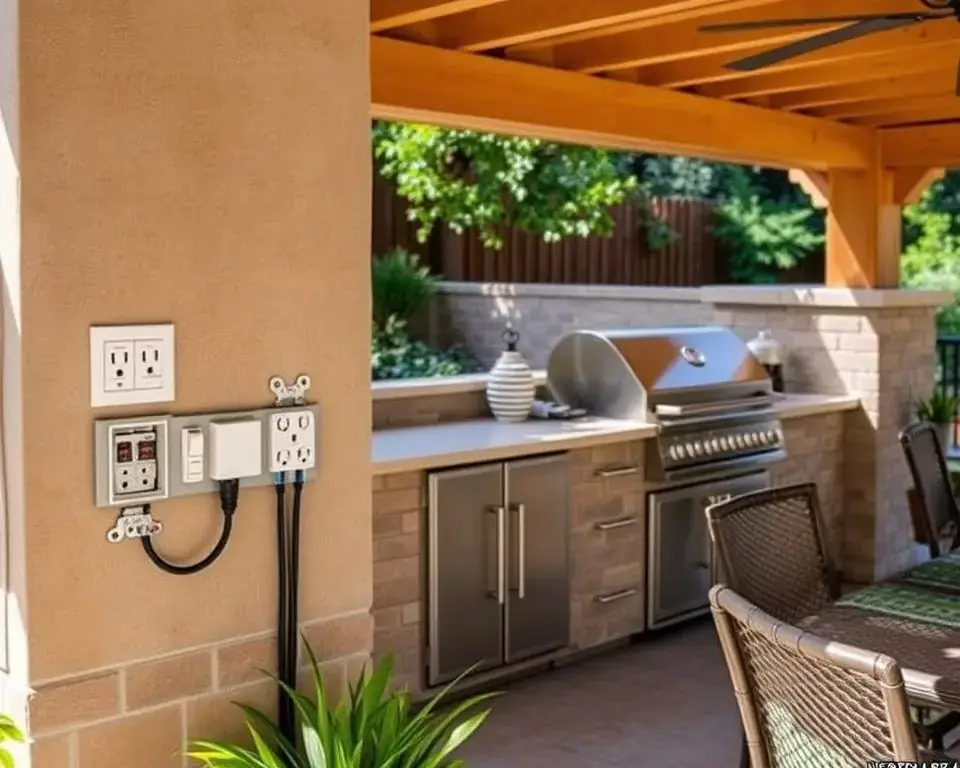
Analyzing common outdoor kitchen electrical mistakes requires dismantling a dangerous assumption. Many people assume that standard indoor wiring techniques can simply be extended outdoors with minor modifications. For example, many DIY builders and inexperienced contractors assume that running standard Romex wire through a basic plastic garden hose constitutes an acceptable supply line for a backyard kitchen island. In reality, standard indoor cables lack moisture-blocking insulation and mechanical armor. Therefore, they suffer from rapid jacket deterioration, short circuits, and lethal ground faults when subjected to damp soil and burrowing pests.
Another major misunderstanding involves the improper application of weatherproof enclosures and device covers. Installers frequently utilize standard indoor wall switches and vertical-facing outlet covers on outdoor kitchen islands. Consequently, wind-driven rain or liquid splashes pour directly into live receptacle slots. Furthermore, oversimplifying circuit load calculations causes severe issues. Placing high-draw appliances—such as electric smokers, heavy-duty rotisserie motors, refrigeration compressors, and countertop warming trays—on a single overloaded 15-amp circuit causes persistent breaker tripping.
Oversights also plague GFCI (Ground Fault Circuit Interrupter) placement and accessibility. Installing a single GFCI breaker at the main indoor electrical panel without providing a local, weather-resistant GFCI receptacle at the actual kitchen island violates safety codes. Moreover, it leaves users vulnerable if the upstream breaker fails to trip during a fault condition. Recognizing these systemic vulnerabilities is the baseline requirement for establishing a secure outdoor electrical grid.
Deep Contextual Background: The Evolution of Residential Exterior Electrical Codes
The contemporary regulatory framework governing outdoor electrical installations descends from decades of tragic electrical accidents, property fires, and evolving electrical engineering standards. Historically, residential backyards featured minimal electrical infrastructure. For example, they often featured only a single, ungrounded exterior porch light or a basic unprotectable outlet wired directly from an indoor living area. As suburban lifestyles shifted toward elaborate outdoor living spaces and fully equipped open-air kitchens, the electrical demands of residential patios escalated dramatically.
During the late twentieth century, the National Electrical Code introduced stringent requirements. Specifically, these rules targeted outdoor receptacles, underground wiring depths, and mandatory Ground Fault Circuit Interrupter protection. These code revisions responded directly to the high conductivity of wet earth, damp concrete patios, and pool-adjacent environments. Early installations that relied on standard indoor wiring methods were systematically phased out. Instead, standards shifted in favor of rigid metal conduits, direct-burial cable ratings, and weatherproof box assemblies.
This historical tightening of electrical safety regulations reflects a growing recognition that outdoor environments present unique hazard multipliers. Modern electrical planning must account for these codified standards not merely as bureaucratic hurdles, but as hard-earned engineering boundaries designed to prevent catastrophic electrical shock and structural fire hazards.
Conceptual Frameworks and Mental Models for Safe Outdoor Power Distribution
Designing an error-free outdoor kitchen electrical system requires structured mental models that impose discipline on circuit loading, moisture isolation, and physical protection.
The Electrochemical Moisture Barrier Model
This framework views every outdoor electrical connection as a potential corrosion site. Consequently, it dictates that wiring must be shielded inside rated conduits or direct-burial jackets. Additionally, it requires utilizing dielectric grease, compression fittings, and weather-resistant enclosures to prevent moisture ingress from initiating galvanic decay or short circuits.
The Cumulative Load and Ampacity Matrix
This mental model evaluates the simultaneous electrical draw of all appliances operating on a single circuit. It balances the continuous and surge loads of refrigeration compressors, lighting ballasts, and heating elements against wire gauge sizing and breaker ratings. As a result, this prevents conductor overheating and voltage drop.
The Fault Isolation Hierarchy
To protect users from fatal shock, this model establishes a multi-tiered safety network. It combines upstream circuit breaker protection, mid-line GFCI devices, and equipment grounding conductors that immediately clear faults before human touch current reaches dangerous thresholds.
Key Categories and Structural Variations: Trade-Offs and Comparisons
Selecting the correct wiring methods, enclosure types, and protection devices dictates the long-term safety and operational reliability of an outdoor kitchen. The primary electrical installation categories present distinct operational compromises.
-
Rigid Metal Conduit (RMC) Underground Runs: Utilizing heavy-walled galvanized steel pipe to encase conductors beneath patio slabs and landscaping. While it provides maximum physical protection against shovel strikes, it incurs high material costs and intensive manual labor.
-
Schedule 80 PVC Conduit Systems: Employing thick-walled plastic piping for underground and exposed riser runs. It offers excellent corrosion resistance in damp soils and easy solvent-weld assembly, but heavy equipment can crush it if buried too shallowly.
-
Direct-Burial UF-B Cable Installation: Laying specialized underground feeder cable directly into a trench without protective conduit where permitted by local codes. Although it reduces material costs and trenching complexity, it leaves the cable vulnerable to future digging damage or rodent chewing.
-
Weatherproof In-Use Covers (Bubble Covers): Mounting heavy-duty gasketed plastic or metal covers that enclose plugged-in cords while protecting receptacles from rain. While it ensures continuous safety during appliance operation, cheap plastics can crack under UV exposure.
-
Dedicated 20-Amp Multi-Circuit Layouts: Running separate, dedicated electrical feeds to heavy-draw appliances like refrigeration units and electric grills. It prevents nuisance tripping and voltage drops, but increases panel space requirements and installation time.
-
Remote Sub-Panel Integration: Installing a dedicated outdoor sub-panel adjacent to the kitchen island to manage multiple circuits locally. While it centralizes breaker access and simplifies future appliance additions, it requires significant upfront wiring and enclosure investment.
-
Self-Testing GFCI Receptacle Integration: Placing tamper-resistant, weather-resistant GFCI outlets at accessible points along the kitchen island. It provides immediate local fault detection and manual reset capabilities, but requires periodic mechanical testing to verify internal sensor health.
-
Low-Voltage LED Lighting Transformers: Supplying 12-volt power to countertop and toe-kick task lighting via a weatherproof outdoor transformer. While it eliminates high-voltage shock risks in wet work zones, it requires careful voltage-drop calculations over long wiring runs.
Electrical Strategy Comparison Table
| Installation Strategy | Upfront Capital Outlay | Mechanical Protection | Environmental Sealing | Installation Complexity |
| Rigid Metal Conduit (RMC) | High | Maximum | High | High (Threading/Bending) |
| Schedule 80 PVC Conduit | Moderate | High | Moderate-High | Moderate |
| Direct-Burial UF-B Cable | Low | Low | Moderate | Low |
| Local Outdoor Sub-Panel | High | Maximum | High | High (Professional Required) |
Realistic Decision Logic
When evaluating these options against site constraints, the primary decision pivot is physical vulnerability versus environmental exposure. If an outdoor kitchen power feed must cross a high-traffic concrete patio, utilizing Schedule 80 PVC or Rigid Metal Conduit buried to correct depth is mandatory to prevent mechanical cable severance. Conversely, for a low-impact landscape run supplying a simple lighting transformer far from heavy foot traffic, direct-burial cable installed with warning tape provides adequate and cost-effective service.
Detailed Real-World Scenarios and Field Constraints
Translating electrical safety theory into physical site execution requires analyzing specific structural roadblocks and installation challenges.
A : The Shallow Direct-Burial Trench Failure
A homeowner digs a four-inch-deep trench across a lawn to lay an unshielded electrical cable to an outdoor kitchen island.
-
Constraint: A later landscaping project involving aerating or planting shrubbery drives a steel garden spade directly through the shallow cable. Consequently, this causes a massive short circuit.
-
Decision Point: The owner excavates the entire line. Next, they replace the severed cable with Schedule 80 PVC conduit buried to the mandatory eighteen-inch depth, and pull individual THWN copper wires through the pipe.
-
Failure Mode: Splicing the damaged cable underground with standard electrical tape and burying it again without a rated junction box creates a hidden fire and electrocution hazard.
-
Second-Order Effect: Adhering to proper burial depth requirements prevents accidental utility strikes and ensures compliance with electrical inspection codes.
B : The Unprotected Indoor Switch Integration
An installer mounts a standard indoor wall switch on an open-air stone kitchen island to control under-counter accent lighting.
-
Constraint: The first heavy wind-driven rainstorm forces water directly through the standard switch toggle, flooding internal contacts and tripping the main breaker.
-
Decision Point: The builder removes the indoor switch. Afterward, they install a weatherproof cast-metal box equipped with a gasketed spring-loaded cover and a weather-resistant rated switch.
-
Failure Mode: Applying a bead of silicone caulk around a standard indoor switch cover while leaving the switch mechanism unrated fails to stop moisture vapor condensation from destroying the switch internals.
-
Second-Order Effect: Utilizing outdoor-rated control devices eliminates moisture-induced short circuits and extends the operational lifespan of the lighting system.
C : The Overloaded Single-Circuit Kitchen Island
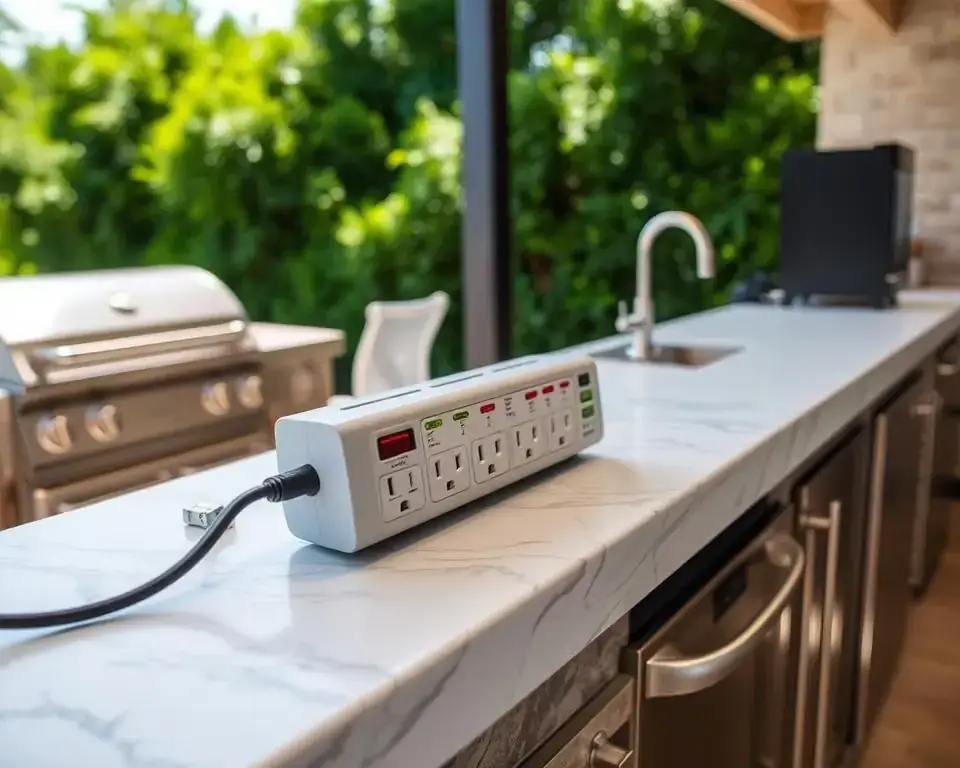
A property owner plugs an electric smoker, a heavy-duty rotisserie motor, a mini-refrigerator, and a blender into a single outdoor outlet strip.
-
Constraint: Turning on the electric smoker while the refrigerator compressor kicks on instantly overloads the circuit, tripping the breaker and interrupting food preparation.
-
Decision Point: An electrician runs a dedicated 20-amp multi-wire branch circuit from the main house panel directly to a new sub-panel at the outdoor island. This separates high-draw heating appliances from sensitive electronics.
-
Failure Mode: Replacing the 15-amp breaker with a 30-amp breaker without upgrading the underlying 14-gauge wire causes the wires to overheat inside the wall, triggering an electrical fire.
-
Second-Order Effect: Proper load segregation ensures uninterrupted appliance performance and protects wire insulation from thermal degradation.
D : The Corroded Outdoor Sub-Panel Enclosure
A contractor mounts an indoor-rated steel electrical sub-panel on the exterior back wall of an outdoor kitchen stone structure.
-
Constraint: Atmospheric humidity and swimming pool chemical vapors corrode the steel door hinges and internal bus bars within eighteen months, causing intermittent power drops.
-
Decision Point: The corroded panel is replaced with a NEMA 4X rated stainless steel or non-metallic weatherproof enclosure featuring watertight hub fittings and internal corrosion inhibitors.
-
Failure Mode: Spraying anti-rust paint over a rusted indoor panel enclosure fails to stop internal electrochemical decay driven by continuous moisture exposure.
-
Second-Order Effect: Selecting the correct NEMA enclosure rating ensures long-term structural integrity in harsh coastal or pool-adjacent microclimates.
Planning, Cost Structures, and Resource Dynamics
Financial efficiency in outdoor electrical construction relies on investing in proper conduit infrastructure, rated enclosures, and professional permits during initial installation rather than paying for expensive remediation later.
-
Direct Material Costs: Conduits, THWN copper conductors, weather-resistant GFCI receptacles, NEMA enclosures, and trenching materials.
-
Indirect and Overhead Costs: Electrical contractor labor rates, municipal permit and inspection fees, concrete trench patching, and core-drilling equipment rentals.
-
Opportunity Costs: The loss of outdoor living functionality and the high cost of replacing ruined electrical appliances caused by power surges or water intrusion.
-
Geographic Variability: Regional frost line depths (dictating burial trench depth), local labor rates, and strict municipal electrical code amendments dictate baseline project budgeting.
Financial Allocation and Range Dynamics
| Electrical Installation Tier | Typical Project Cost Range | Primary Component Focus | Engineering Complexity | Safety Reliability |
| Basic Surface Extension | $300 – $900 | UF Cable / Standard GFCI | Low | Moderate (High Risk) |
| Standard Conduit & GFCI Grid | $1,200 – $3,500 | PVC Conduit / Weatherproof Boxes | Moderate | High |
| Comprehensive Sub-Panel Array | $4,000 – $9,000+ | Sub-Panel / Dedicated 20A Circuits | High / Permitted | Maximum |
Tools, Construction Strategies, and Support Systems
Execution efficiency in outdoor electrical work relies on deploying specialized conduit bending tools, wire-pulling lubricants, and testing instruments.
-
Conduit Benders (Manual and Hydraulic): Essential for shaping rigid metal and PVC conduits cleanly around patio corners without kinking the pipe walls.
-
Digital Multimeters: Verifies voltage levels, checks continuity, and ensures proper grounding resistance across all outdoor receptacles and fixtures.
-
GFCI Circuit Testers: Plugs directly into outdoor outlets to instantly validate correct wiring polarity and verify that ground fault trip mechanisms function correctly.
-
Trencher and Jackhammer Rentals: Mechanizes the deep excavation required to bury electrical conduits below frost lines and through concrete flatwork.
-
Wire-Pulling Lubricants: Reduces friction when pulling multiple THWN copper conductors through long underground conduit runs, preventing insulation damage.
-
Torque Screwdrivers: Ensures electrical terminal screws are tightened to manufacturer-specified torque ratings, preventing loose connections and resistive heating.
-
Silicone Dielectric Compound: Coats electrical contacts and bulb bases inside outdoor fixtures to block moisture and prevent terminal corrosion.
Risk Landscape, Failure Modes, and Compounding Hazards
Ignoring electrical safety codes and proper installation standards in outdoor kitchens introduces severe compounding hazards that threaten human life and property.
Lethal Shock and Ground Fault Hazards
Moisture bridging live electrical terminals in unsealed outdoor boxes creates immediate shock paths through wet patio concrete or damp earth, risking fatal electrocution.
Electrical Fire Initiation
Overloaded circuits, loose terminal connections, and damaged wire insulation generate intense localized heat within enclosed kitchen islands, igniting combustible framing materials.
Appliance Compressor and Motor Burnout
Inadequate wire gauge sizing over long underground runs causes severe voltage drop. Consequently, this starves refrigerator compressors and rotisserie motors of required operating voltage and burns out their windings.
Premature Circuit Breaker Failure
Exposing standard circuit breakers or unprotected sub-panels to corrosive chemical vapors and humidity causes internal tripping mechanisms to seize, eliminating short-circuit protection.
Governance, Maintenance, and Long-Term Adaptation
Preserving the safety and operational reliability of an outdoor kitchen electrical grid requires systematic seasonal maintenance, manual testing cycles, and proactive inspections.
Seasonal Maintenance Protocols
-
Spring GFCI Functional Testing: Pressing the test and reset buttons on all outdoor GFCI receptacles and breakers to ensure internal trip mechanisms operate smoothly after winter.
-
Summer Enclosure Seal Inspection: Checking rubber gaskets, door latches, and cover hinges on weatherproof boxes for cracking, wear, or UV degradation.
-
Autumn Low-Voltage Transformer Check: Inspecting landscape and task lighting transformers for moisture accumulation, insect nests, and secure terminal connections before freezing weather arrives.
Review Cycles and Adjustment Triggers
Establishing bi-annual inspection routines allows property owners to check for cracked conduit fittings, tripped breakers, or corrosion around device plates. If an outdoor outlet trips repeatedly during damp weather, immediate professional investigation of ground fault leakage is required.
Layered Electrical Maintenance Checklist
-
Test all GFCI receptacles manually using built-in test buttons semi-annually.
-
Inspect outdoor weatherproof covers for tight closure and gasket integrity.
-
Verify that underground conduit risers have not shifted or cracked due to soil settling.
-
Check exterior light fixtures and appliance plugs for signs of moisture condensation or corrosion.
Measurement, Tracking, and Evaluation Metrics
Evaluating the success of an outdoor electrical installation requires tracking both quantitative safety metrics and qualitative operational performance indicators over extended seasonal cycles.
-
Ground Fault Resistance (Megohm) Values: Measuring insulation resistance across underground conductors to detect microscopic jacket degradation.
-
Voltage Drop Percentage: Verifying that voltage measured at the furthest outdoor appliance remains within 3 percent of the main panel supply voltage under full load.
-
GFCI Trip Response Time: Recording the milliseconds required for ground fault protection devices to cut power during simulated fault conditions.
-
Thermal Imaging Temperature Variance: Using infrared cameras to inspect electrical panels and sub-panels for abnormal hot spots caused by resistive loose connections.
Documentation and Tracking Examples
-
Electrical Commissioning Log: Recording circuit numbers, wire gauge sizes, breaker ratings, and underground conduit burial depths upon project completion.
-
GFCI Testing Ledger: Documenting bi-annual test dates, trip verification results, and device replacement intervals.
-
Inspection and Maintenance Record: Tracking seasonal enclosure checks, voltage measurements, and thermal scan findings.
Common Misconceptions and Oversimplifications
-
Myth: Standard indoor Romex electrical cable can be used outdoors as long as you wrap it in black electrical tape.
-
Correction: Romex cable lacks weather-resistant jackets and moisture barriers; it will degrade rapidly in soil and cause dangerous short circuits.
-
-
Myth: Placing a regular plastic grocery bag or bucket over an outdoor outlet provides adequate rain protection.
-
Correction: Makeshifts trap condensation and moisture against live parts, creating severe shock and fire hazards.
-
-
Myth: Any standard wall switch or outlet can be installed on an outdoor kitchen island if it is placed under a roof overhang.
-
Correction: Wind-driven rain and high humidity reach covered patio areas easily, requiring weather-resistant and NEMA-rated devices.
-
-
Myth: You can bury electrical wire just a few inches deep in a garden bed without conduit.
-
Correction: National Electrical Code mandates strict minimum burial depths to prevent spade strikes.
-
-
Myth: A single 15-amp circuit is enough to power an entire outdoor kitchen including a fridge, grill, and heater.
-
Correction: High-draw heating appliances and refrigeration compressors require dedicated 20-amp circuits to prevent continuous breaker tripping.
-
-
Myth: GFCI protection is only needed at the indoor main breaker panel for outdoor outlets.
-
Correction: Local, accessible weather-resistant GFCI receptacles are required at the point of use to ensure immediate testing and safety reset capabilities.
-
Ethical, Practical, and Contextual Considerations
Executing electrical work in residential outdoor spaces carries profound legal, safety, and ethical responsibilities. Bypassing national electrical codes, utilizing unrated materials, or performing DIY wiring without municipal permits places future occupants, guests, and emergency first responders at severe risk of electrocution and structural fire. Property owners must prioritize hiring licensed electricians, securing proper permits, and ensuring that all outdoor power distribution networks undergo rigorous municipal inspection. Upholding these professional standards protects human life, property value, and community safety.
Conclusion
Mastering common outdoor kitchen electrical mistakes demands an uncompromising commitment to code compliance, weather-rated hardware selection, and proper underground installation depth. By rejecting makeshift wiring practices, investing in dedicated circuit layouts, and maintaining rigorous GFCI testing protocols, property owners achieve enduring electrical safety. True outdoor power reliability is born of meticulous planning, technical rigor, and profound respect for the hazards of mixing electricity with the open-air environment.