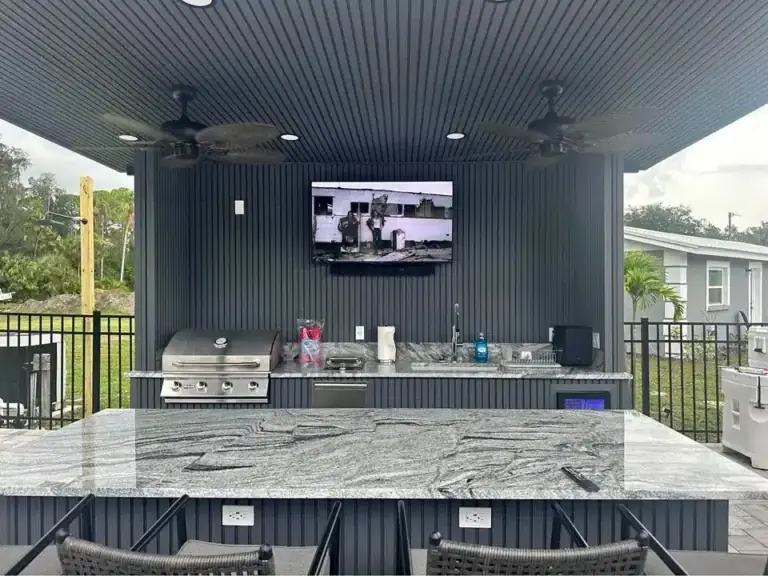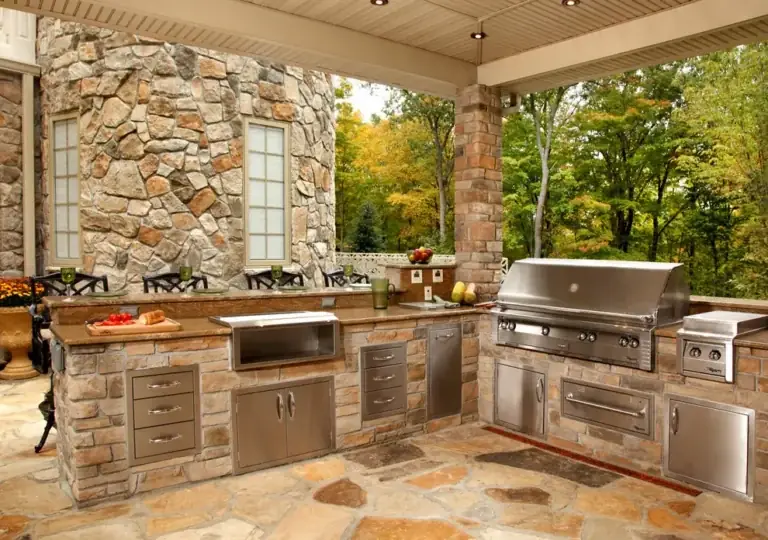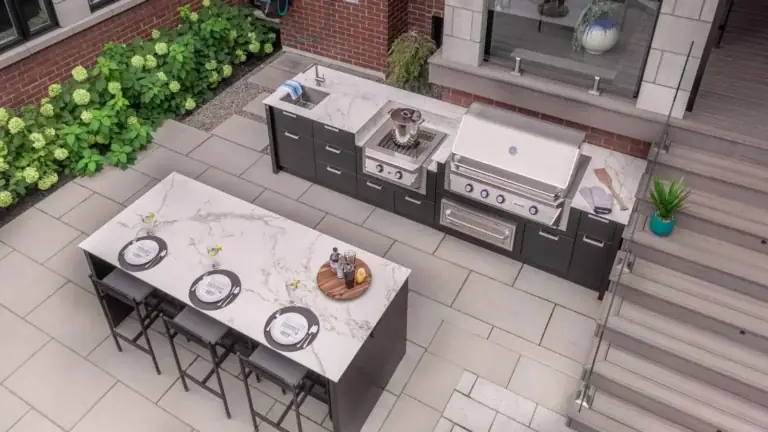
How to Manage Weatherproofing for Outdoor Kitchens: Definitive Guide
Constructing a permanent culinary station within an open-air environment exposes materials to an unyielding cycle of atmospheric assault. Unlike interior rooms protected by continuous climate control and uniform framing systems, exterior installations must withstand driving rain, ultraviolet bombardment, sub-zero freeze-thaw sequences, and corrosive salt-air drift. When builders treat outdoor cabinetry and appliances like their indoor counterparts, structural breakdown occurs rapidly. Moisture infiltrates structural joints, thermal expansion shears rigid sealants, and electrochemical reactions pit stainless steel surfaces.
Protecting these installations demands an architectural strategy that goes beyond simple seasonal canvas covers. Mastering how to manage weatherproofing for outdoor kitchens requires a deep understanding of material metallurgy, moisture management dynamics, and localized microclimate behavior. Every selection—from the grade of structural steel framing to the chemical composition of stone sealants—dictates whether an installation survives decades of environmental wear or fails within a few changing seasons.
Long-term durability emerges from comprehensive site analysis and disciplined material matching. Builders must account for wind-driven moisture vectors, heavy snow loads, and radical temperature shifts before laying foundations or assembling modules. This guide explores the mechanical principles, structural frameworks, and protective strategies required to engineer a weather-resilient exterior workspace.
Understanding “how to manage weatherproofing for outdoor kitchens”
Navigating how to manage weatherproofing for outdoor kitchens requires dismantling the persistent myth that applying a generic water-repellent spray to wood or stone solves exterior moisture vulnerabilities. Residential properties experience complex environmental interactions where wind-driven rain forces water upward into unsealed framing cavities, and trapped humidity accelerates mold and wood rot behind decorative stone veneers. Assuming that exterior-rated building products are entirely impervious to weather leads to premature structural failure.
Another common misunderstanding involves the assumption that stainless steel is a maintenance-free material. Standard 304 stainless steel will pit and rust when exposed to swimming pool chlorine, atmospheric pollutants, or coastal salt spray if not regularly passivated and cleaned. True weatherproofing requires matching specific metal grades to specific environmental stressors, such as utilizing marine-grade 316 stainless steel in high-salinity zones.
Oversimplification also plagues drainage design. Homeowners frequently seal outdoor counters completely to keep water out, failing to realize that trapped moisture expands during freeze-thaw cycles and cracks masonry joints. A holistic protective approach relies on managed drainage, breathable cavities, and continuous air circulation to ensure that moisture entering the structure can escape freely before causing internal damage.
Deep Contextual Background: The Evolution of Exterior Material Science
The contemporary approach to defending outdoor culinary structures descends from centuries of vernacular architecture and industrial marine engineering. Historically, outdoor cooking was confined to stone hearths and brick pits built with lime mortars that naturally absorbed and released moisture without cracking. These traditional materials tolerated environmental cycling because they lacked complex, multi-layered modern assemblies.
During the late twentieth century, the rise of outdoor living spaces led builders to adapt interior cabinet construction methods to the backyard. Early modern outdoor kitchens utilized wood framing covered with standard drywall and thin tile veneers. These hybrid assemblies trapped moisture, resulting in widespread structural rot, mold proliferation, and structural collapse within short timeframes. The resulting failures forced a massive shift toward industrial-grade aluminum framing, waterproof cement boards, and specialized polymer coatings.
Today, weatherproofing science draws heavily from commercial marine and aerospace protocols. The industry now recognizes that exterior structures must be treated as ventilated assemblies rather than hermetically sealed boxes. Understanding this historical transition clarifies why modern protective standards prioritize drainage channels, weep holes, and corrosion-resistant alloys over simple waterproof membranes.
Conceptual Frameworks and Mental Models for Environmental Defense
Designing a weather-resistant exterior kitchen requires structured mental models that govern how moisture, heat, and wind interact with physical materials.
The Barrier Versus Drainage Wall Model
This framework contrasts two philosophies of moisture control. The barrier approach attempts to block water entry entirely using surface sealants and gaskets, which inevitably fail under thermal stress. The drainage model accepts that water will eventually penetrate exterior surfaces, engineering internal channels and weep paths to safely route moisture out of the structure before it causes damage.
The Galvanic Corrosion Matrix
Environmental exposure introduces moisture that acts as an electrolyte between dissimilar metals. This mental model maps the electrochemical potential of adjacent fasteners and framing materials. It dictates that combining carbon steel screws with aluminum framing in a wet outdoor environment will trigger rapid galvanic corrosion, necessitating isolated fasteners and protective dielectric barriers.
The Thermal-Moisture Cycling Index
Materials expand and contract at different rates when subjected to radical temperature swings and moisture absorption. This model evaluates how counters, frames, and masonry interact during seasonal shifts, enforcing the use of flexible expansion joints to prevent cracking and structural warping.
Key Categories and Protective Variations: Trade-Offs and Comparisons
Selecting the correct protective systems and material categories dictates the long-term survival of an outdoor kitchen. The primary defensive strategies present distinct operational compromises.
-
Penetrating Siloxane Stone Sealants: Deeply impregnate porous stones to block water absorption while maintaining vapor permeability, though they require reapplication every one to two years.
-
Marine-Grade 316 Stainless Steel: Incorporates molybdenum to resist pitting corrosion from salt and chlorine, but commands a significant capital price premium over standard grades.
-
Powder-Coated Aluminum Framing: Offers a lightweight, corrosion-free structural skeleton that withstands heavy moisture, though scratches can expose base metal to localized oxidation.
-
Waterproof Cementitious Backer Boards: Replaces traditional wood framing substrates with non-organic panels that will not rot or degrade when exposed to standing water.
-
Coated Polyurethane Cabinetry: Resists moisture warping and ultraviolet fading completely, but can look visually sterile compared to natural wood or stone finishes.
-
Bituminous Waterproofing Membranes: Applied beneath stone countertops to create an impenetrable liquid barrier, though trapped moisture beneath the membrane can cause blistering.
-
Exterior-Grade Polymeric Sealants: Flexible compounds used for joint expansion that accommodate thermal movement, though UV exposure eventually degrades their elasticity.
-
Ventilated Soffit and Weep Grilles: Integrated ventilation pathways that promote internal airflow to dry out trapped humidity, though they require careful detailing to prevent pest entry.
Protective Material Performance Comparison
| Material / System | Moisture Resistance | UV Degradation Resistance | Maintenance Frequency | Cost Impact |
| Marine-Grade 316 Steel | Maximum | Maximum | Low (Annual passivation) | High |
| Powder-Coated Aluminum | High | High | Low | Moderate-High |
| Impregnating Stone Sealer | Moderate-High | Moderate | High (Annual/Biennial) | Low-Moderate |
| Standard Cement Board | High | Maximum | None | Low |
Realistic Decision Logic
When evaluating these options against site constraints, the primary decision pivot is regional climate severity versus budget allocation. If an outdoor kitchen is built in an arid, low-humidity desert environment, investing heavily in marine-grade 316 stainless steel and complex drainage matrices is unnecessary. Standard 304 steel and basic sealants suffice. Conversely, in humid coastal zones or snowy regions subject to heavy freeze-thaw cycles, skipping marine-grade alloys and waterproofing membranes guarantees rapid structural degradation.
Detailed Real-World Scenarios and Field Constraints
Translating weatherproofing theory into physical execution requires analyzing specific site constraints and environmental roadblocks.
A : The Coastal Salt-Spray Corrosion Zone
An outdoor kitchen is constructed fifty yards from the ocean shoreline, utilizing standard 304 stainless steel grill components and unsealed fasteners.
-
Constraint: Airborne salt-spray deposits aggressive chlorides onto the metal surfaces, initiating rapid pitting corrosion within six months.
-
Decision Point: The builder strips the corroded hardware, upgrades all structural fasteners to silicon bronze, and replaces the appliance suite with passivated 316 stainless steel units.
-
Failure Mode: Failing to wash down salt residues periodically allows localized crevice corrosion to destroy hinges and drawer slides.
-
Second-Order Effect: The high initial cost of marine-grade replacements forces cutbacks in other areas, such as substituting custom stone counters with poured concrete.
B : The Sub-Zero Freeze-Thaw Concrete Splitting
A masonry outdoor kitchen features a poured concrete countertop with an integrated undermount sink left exposed to winter snows.
-
Constraint: Trapped moisture inside the unsealed concrete pores freezes, expanding and causing severe structural cracking along the sink cutout rim.
-
Decision Point: The contractor cuts relief expansion joints, injects a low-viscosity epoxy resin, and applies a multi-layer breathable silane-siloxane sealer.
-
Failure Mode: Applying an acrylic film-forming sealer instead of a penetrating sealer traps sub-surface moisture, accelerating freeze-thaw spalling.
-
Second-Order Effect: Remediation requires tenting and heating the entire kitchen structure during winter repair work, driving up labor expenses.
C : The Humid Subtropical Mold Proliferation
An enclosed wood-framed outdoor kitchen island with tight stucco cladding is built in a high-humidity southern climate.
-
Constraint: Ingress moisture becomes trapped behind the impermeable stucco skin, causing hidden wood rot and black mold proliferation within the structural cavity.
-
Decision Point: The project team dismantles the wet stucco facade, installs a capillary break drainage plane, and adds low-profile stainless steel ventilation grilles to promote air circulation.
-
Failure Mode: Ignoring interior cavity ventilation ensures that mold will return despite external surface treatments.
-
Second-Order Effect: Rebuilding the skin with ventilated cement board panels increases project duration and shifts material expenses.
D : The Intense UV Solar Degradation
A sleek, dark-stained wood kitchen is installed on an exposed patio receiving direct sunlight for ten hours daily.
-
Constraint: Intense ultraviolet radiation breaks down surface polyurethane finishes, causing peeling, fading, and wood dryness within one season.
-
Decision Point: The team strips the degraded finish and transitions to a deep-penetrating, UV-stabilized tung oil formula that feeds the wood grain without forming a peeling film.
-
Failure Mode: Applying standard indoor varnish accelerates UV blistering because the finish cannot flex with thermal wood movement.
-
Second-Order Effect: Penetrating oils require more frequent seasonal re-application, introducing an ongoing maintenance labor commitment for the property owner.
Planning, Cost Structures, and Resource Dynamics
Financial efficiency in weatherproofing requires balancing upfront material investments against long-term maintenance liabilities.
-
Direct Protective Costs: Premium corrosion-resistant fasteners, marine-grade metal alloys, breathable sealants, and waterproof sub-framing boards.
-
Indirect and Overhead Costs: Specialized contractor labor for drainage detailing, application equipment rentals, and protective winter storage covers.
-
Opportunity Costs: The structural deterioration and loss of functional utility that occurs when low-cost sealants fail prematurely, requiring messy tear-outs and reconstruction.
-
Geographic Variability: Regional climate severity dictates protective requirements; high-moisture coastal or alpine zones demand significantly higher weathering budgets than temperate inland regions.
Financial Allocation and Range Dynamics
| Protection Tier | Target Environment | Key Technologies | Upfront Cost Multiplier | Expected Lifespan |
| Basic Baseline | Arid / Inland Temperate | Standard sealants; 304 steel; wood/concrete framing | Baseline (1.0x) | 5 – 8 Years |
| Intermediate Defense | Continental / Four-Season | Cement boards; penetrating sealers; powder-coated steel | Moderate (1.5x) | 10 – 15 Years |
| Advanced Shielding | Coastal / Alpine / Extreme | 316 stainless; drainage cavities; marine hardware | High (2.2x) | 25+ Years |
Tools, Defensive Strategies, and Execution Systems
Execution excellence in weatherproofing relies on deploying specialized application tools and strict assembly verification protocols.
-
Electronic Moisture Meters: Essential for verifying that concrete slabs and framing lumber reach acceptable dryness thresholds before sealants or adhesives are applied.
-
High-Pressure Air Compressors: Used to blow construction dust, masonry debris, and moisture out of expansion joints and anchor bolt holes prior to sealing.
-
Mil-Thickness Coating Gauges: Precision tools that measure wet and dry film thicknesses of protective sealants and paints to ensure manufacturer application specifications are met.
-
Dielectric Barrier Tape: Applied between dissimilar metal surfaces (such as aluminum framing and stainless steel fasteners) to prevent galvanic corrosion.
-
Thermal Imaging Cameras: Utilized during commissioning to detect hidden moisture pockets, thermal bridging, and air leaks within multi-layer wall assemblies.
-
Propane Torches for Flashing: Used to heat-seal modified bitumen waterproofing membranes around sink basins and utility penetrations.
-
Chemical Passivation Gel Sets: Applied to welded stainless steel seams to restore the chromium oxide layer after thermal fabrication cuts.
Risk Landscape, Failure Modes, and Compounding Hazards
Ignoring material physics and moisture management introduces cascading risks that can compromise structural safety and trigger costly failures.
Galvanic Frame Degradation
Allowing carbon steel fasteners to touch aluminum structural studs in the presence of outdoor condensation sets up an electrochemical cell. Over time, the aluminum framing corrodes away around the screws, causing structural joints to loosen and masonry islands to shear apart under dynamic loads.
Trapped Sub-Surface Hydrostatic Pressure
Applying non-breathable waterproofing paints or thick epoxy films over damp concrete foundations creates a vapor barrier. When ground moisture attempts to escape upward, hydrostatic pressure blisters the coating and splits the underlying concrete matrix.
Electrical Short-Circuiting in Wet Junctions
Failing to install proper weather-proof, gasketed electrical boxes and marine-grade conduit in damp masonry cavities invites moisture intrusion. When combined with ground faults, trapped water creates severe electrical shock hazards and trips breaker panels during heavy rainstorms.
Insect Infestation in Rotted Wood Cavities
Moisture accumulation within unvented wood-framed kitchen islands creates an ideal breeding environment for wood-boring insects and decay fungi. As structural timber loses integrity, heavy stone countertops can shift and crack without warning.
Governance, Maintenance, and Long-Term Adaptation
Preserving a weatherproof exterior installation requires systematic monitoring, seasonal maintenance cycles, and prompt remediation of environmental wear.
Seasonal Maintenance Protocols
-
Pre-Winter Water Blowout: Using compressed air to purge sink supply lines, ice makers, and water filtration units before sub-zero temperatures induce pipe-bursting pressures.
-
Hardware Lubrication: Applying marine-grade anti-seize lubricant to stainless steel drawer tracks, hinge pins, and gas valve stems to prevent salt and moisture binding.
-
Sealant Inspection and Renewal: Testing joint flexibility and cutting out degraded silicone or polyurethane caulking before autumn rains initiate water infiltration.
Review Cycles and Adjustment Triggers
Establishing bi-annual inspection windows allows property owners to evaluate protective coatings, check for rust blooms around fasteners, and test drainage weep holes. If hairline cracks emerge in stone sealants or concrete tops, immediate cleaning and re-sealing prevent water penetration from expanding the damage.
Layered Weatherproofing Maintenance Checklist
-
Inspect stainless steel surfaces for initial tea-stain oxidation and apply passivation cleaner.
-
Verify that base weep holes and ventilation grilles remain clear of mulch and debris.
-
Test all GFCI electrical receptacles and weather-proof cover seals.
-
Check stone countertop water-beading performance to determine if re-sealing is required.
Measurement, Tracking, and Evaluation Metrics
Evaluating the effectiveness of a weatherproofing strategy requires tracking both quantitative environmental resilience and qualitative material performance over extended cycles.
-
Corrosion Propagation Rate: Tracking the surface area and depth of any rust pitting or oxidation on metal components over annual observation intervals.
-
Moisture Retention Percentage: Measuring internal wall cavity humidity levels using embedded wireless sensors to ensure proper drying rates.
-
Sealant Integrity Index: Evaluating the adhesion, elasticity, and water-shedding performance of expansion joints and surface sealants.
-
Thermal Stress Fracture Frequency: Documenting the number of new micro-cracks or spalling incidents on concrete and masonry surfaces after winter freeze cycles.
Documentation and Tracking Examples
-
Weatherproofing Ledger: Recording the exact dates, product names, and batch numbers of all sealants and protective coatings applied to the installation.
-
Corrosion Audit Log: Documenting visual inspections of metal hardware, noting any early tea-staining or galvanic reaction zones for immediate remediation.
-
Seasonal Performance Journal: Noting how specific materials respond to extreme weather events, heavy rainstorms, or extended heatwaves.
Common Misconceptions and Oversimplifications
-
Myth: Wrapping an outdoor kitchen in a heavy plastic tarp all winter completely protects it from weather damage.
-
Correction: Tarping traps condensation and humidity against surfaces without airflow, accelerating mold growth, wood rot, and metal oxidation.
-
-
Myth: All stainless steel appliances labeled “stainless” are suitable for outdoor coastal environments.
-
Correction: Lower-grade 304 stainless steel lacks the corrosion resistance required for marine or chlorinated pool environments, leading to rapid rust pitting.
-
-
Myth: Concrete countertops do not need sealing if they are mixed with waterproof additives.
-
Correction: Additives reduce permeability, but concrete remains porous; surface sealants are mandatory to prevent staining and freeze-thaw cracking.
-
-
Myth: Outdoor electrical outlets do not require weatherproof covers if they are located under a patio roof overhang.
-
Correction: Wind-driven rain and ambient humidity can reach sheltered areas, making weather-proof, in-use covers mandatory for safety and code compliance.
-
-
Myth: Wood treatments applied once during construction will protect outdoor cabinetry for its entire lifespan.
-
Correction: Ultraviolet radiation and moisture break down exterior finishes rapidly, requiring re-application every one to three years.
-
-
Myth: Sealing every gap in a masonry outdoor kitchen prevents water damage entirely.
-
Correction: Completely sealing a structure traps internal moisture with no way to escape, causing greater structural decay than a properly ventilated design.
-
Ethical, Practical, and Contextual Considerations
Engineering weather-resistant structures carries civic and environmental responsibilities regarding material disposal and chemical runoff. Utilizing heavy-duty toxic wood preservatives or acid-based masonry cleaners requires careful containment to prevent chemical runoff from contaminating surrounding soil, garden beds, and local stormwater drainage systems. Furthermore, selecting durable, long-lasting materials reduces the environmental footprint associated with frequent material replacement and construction waste disposal. Ensuring that electrical and gas systems meet strict safety codes prevents environmental hazards that could endanger neighboring properties during severe weather events.
Conclusion
Managing weatherproofing for outdoor kitchens demands an uncompromising dedication to material science, drainage logic, and environmental responsiveness. By rejecting superficial sealants and embracing ventilated assemblies, marine-grade metallurgy, and rigorous moisture management, property owners achieve durable, safe, and enduring open-air workspaces. Long-term exterior resilience is not achieved by blocking nature entirely, but by understanding its forces and engineering structures capable of harmonizing with them.