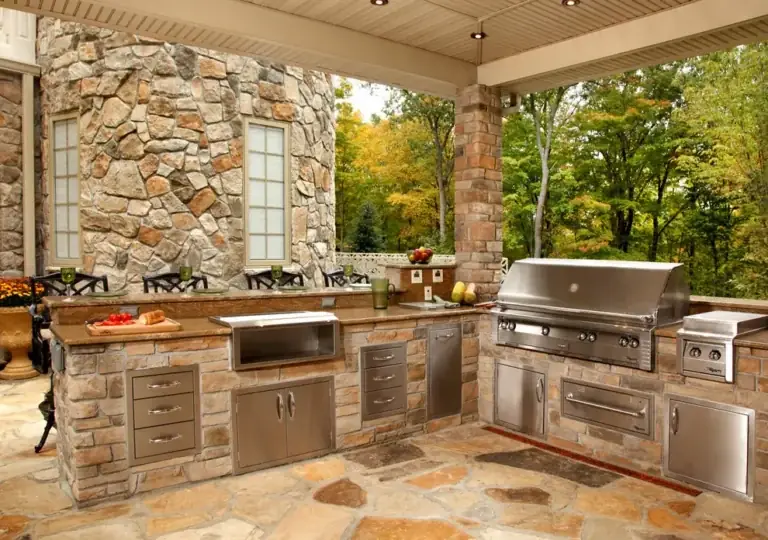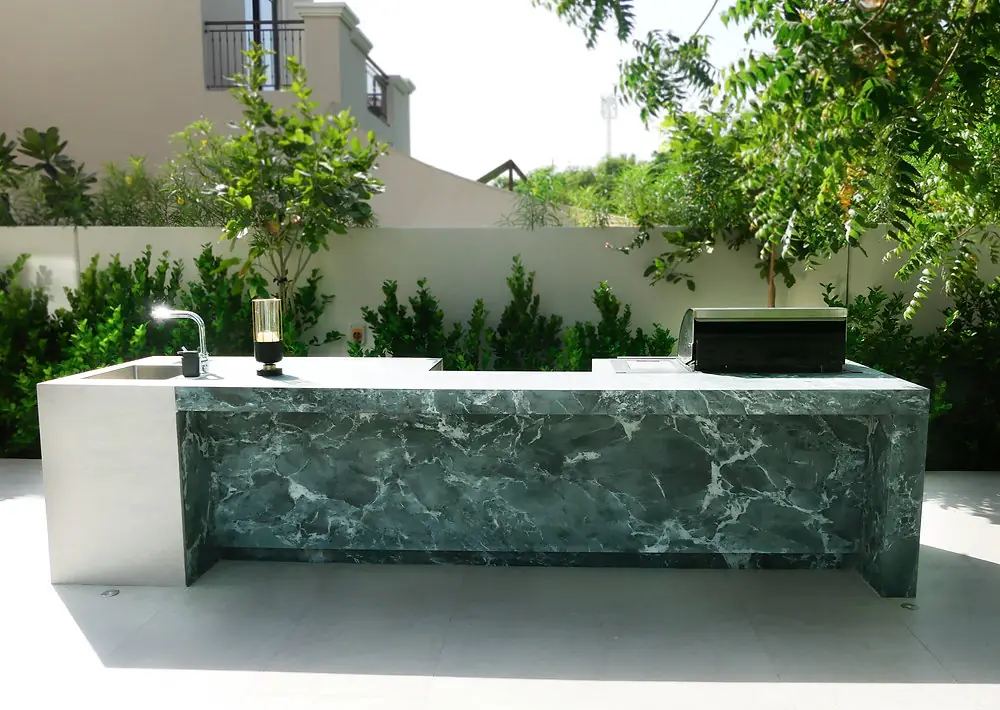
How to Reduce Maintenance on Outdoor Stone Counters: Definitive Guide
Exposing natural and engineered stone surfaces to an open-air environment introduces a relentless physical challenge. Unlike protected interior countertops, exterior stone installations face ultraviolet radiation, organic debris staining, acid rain, and radical freeze-thaw thermal cycling. When property owners treat exterior stone with the same passive expectations as indoor kitchen surfaces, rapid material degradation ensues. Porous minerals absorb grease spatters, iron oxides bleed from ambient leaf litter, and unmanaged moisture breaches micro-fissures, leading to structural spalling.
Alleviating ongoing upkeep burdens demands a strategic shift away from reactive cleaning routines toward proactive material engineering. Mastering how to reduce maintenance on outdoor stone counters requires understanding mineral porosity, chemical sealer interactions, and surface finish physics. Every decision—from selecting dense igneous quartzites over highly porous calcitic marbles to choosing a honed matte texture over a mirror-polished sheen—directly influences the frequency and intensity of future labor requirements.
Achieving low-maintenance longevity relies on rigorous up-front material selection and precise installation detailing. Builders must evaluate regional microclimates, tree canopy proximity, and UV exposure angles before setting a single stone slab. This guide explores the mechanical principles, material variations, and systemic strategies necessary to engineer a resilient, low-upkeep exterior stone workspace.
Understanding “how to reduce maintenance on outdoor stone counters”
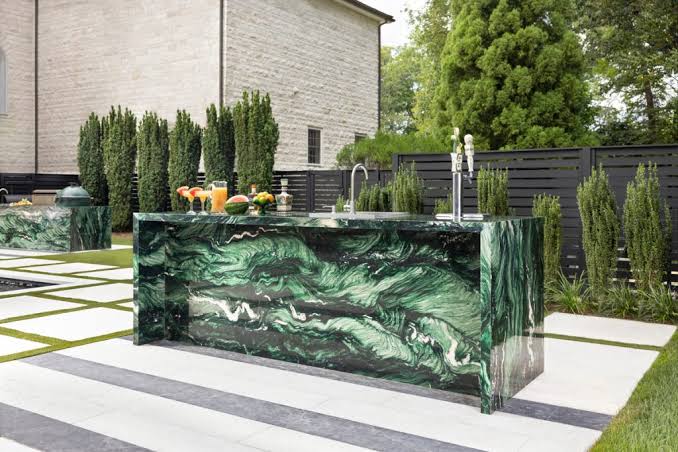
Navigating how to reduce maintenance on outdoor stone counters requires dismantling the persistent myth that a single application of a generic sealer creates a permanent, maintenance-free barrier. Natural stone is a dynamic geological matrix. Porous mineral structures interact continuously with ambient moisture, organic acids from food preparation, and atmospheric pollutants. Assuming that exterior stone can be left unattended for years without consequence guarantees deep staining, etching, and eventual structural compromise.
Another major misunderstanding involves the false equivalence between all stone types used in exterior applications. Property owners frequently select soft, calcium-based stones like marble or travertine for their aesthetic appeal, only to discover that mild acids from citrus, wine, and bird droppings chemically etch the polished surface instantly. True maintenance reduction begins by choosing dense, acid-resistant silicate stones that inherently resist chemical attack.
Oversimplification also plagues finishing choices. Many homeowners insist on high-gloss polished surfaces for outdoor bars, ignoring the fact that outdoor etching and fine scratches show up starkly on mirror finishes, requiring frequent professional repolishing. A holistic approach embraces honed or leathered textures that naturally mask environmental wear, environmental grit, and minor surface etching, thereby lowering the cumulative upkeep burden.
Deep Contextual Background: The Evolution of Exterior Lithic Architecture
The use of stone for horizontal work surfaces descends from classical masonry traditions where thick blocks of local granite, slate, or limestone served as durable prep stations. Historically, these vernacular installations demanded minimal chemical intervention because they relied on the natural weathering patina of the stone. Builders accepted surface staining as an organic aspect of exterior aging, utilizing rough-hewn slabs that required little mechanical maintenance.
During the late twentieth century, the rise of luxury outdoor living spaces transformed backyard kitchens into replicas of indoor culinary zones. This cultural shift popularized sleek, highly polished dimensional stone slabs imported from around the world. However, these fine interior-grade marbles and granites proved ill-suited for unconditioned exterior exposure. The resulting staining, thermal cracking, and high upkeep demands forced a major evolution in stone fabrication and protective chemical technology.
Today, architectural science combines high-performance impregnating fluorochemical sealers with ultra-dense geological selection. The industry recognizes that exterior stone must be chosen for mineral hardness and thermal shock resistance rather than visual aesthetics alone. Understanding this trajectory explains why modern low-maintenance strategies prioritize material chemistry and matte textures over high-gloss surface perfection.
Conceptual Frameworks and Mental Models for Stone Longevity
Designing an exterior stone installation with minimal upkeep requirements demands structured mental models that govern material selection and physical protection.
The Mineral Porosity and Absorption Index
This framework evaluates stone based on its internal capillary structure and absorption rate. Igneous rocks like granite and quartzite feature tightly interlocked silicate crystals with near-zero absorption, whereas sedimentary stones like limestone and sandstone possess high interconnected porosity. Minimizing maintenance requires selecting stones with absorption coefficients below strict low-threshold limits.
The Chemical Hardness and Acid Susceptibility Matrix
This model measures mineral composition against common chemical aggressors. Calcitic stones dissolve upon contact with mild organic acids found in lemons, vinegar, and environmental acid rain. Silicate-based minerals resist acid dissolution entirely. Aligning stone choice with chemical exposure prevents permanent chemical etching.
The Thermal-Mechanical Stress Model
Outdoor stone counters experience extreme thermal cycling, expanding under direct solar radiation and contracting during sudden rainstorms or freezing nights. This mental model dictates that slabs must be supported with flexible elastomeric adhesives and adequate expansion gaps to prevent thermal shock fractures across the stone surface.
Key Categories and Material Variations: Trade-Offs and Comparisons
Selecting the correct stone variety and surface finish dictates the long-term labor required to keep the installation pristine. The primary material categories present distinct operational compromises.
-
Dense Natural Quartzite: Offers exceptional hardness, high acid resistance, and minimal porosity, though its extreme hardness makes custom edge fabrication expensive.
-
Selected Premium Granites: Features high resistance to thermal shock and scratching, but certain dark varieties require frequent sealer reapplication to combat oil absorption.
-
Honed Absolute Black Granite: Provides a sophisticated matte appearance that masks dust and minor scratches, but shows water spots and fingerprint oils easily.
-
Leathered Finish Granite: Features a textured, undulating surface that completely disguises etching, dust, and minor surface wear, though deep crevices can trap organic debris.
-
Engineered Quartz (Indoor Grade): Uniform and non-porous, but resin binders degrade and discolor rapidly when exposed to direct ultraviolet solar radiation outdoors.
-
Sintered Stone / Compact Surfaces: Completely impervious to UV rays, heat, and scratching with near-zero porosity, though prone to catastrophic edge chipping under sharp impacts.
-
Calcitic Marble (Honed): Delivers unmatched classic aesthetics, but requires vigilant sealing and reacts chemically to every acidic spill, demanding high upkeep.
-
Porcelain Slab Counters: Exceptional UV stability and stain resistance with zero sealing requirements, but lacks the solid, monolithic mass of natural stone.
Stone Material Performance Comparison
| Material Category | UV Resistance | Acid Etch Resistance | Porosity Level | Upkeep Frequency |
| Natural Quartzite | Maximum | Maximum | Very Low | Low |
| Leathered Granite | Maximum | High | Low | Low |
| Sintered Stone | Maximum | Maximum | Zero | Minimal |
| Calcitic Marble | Maximum | Poor | High to Moderate | Very High |
Realistic Decision Logic
When evaluating these options against site constraints, the primary decision pivot is solar exposure versus food preparation intensity. If an outdoor counter sits in an unshaded, south-facing patio receiving intense UV radiation all day, organic resin-based quartz materials must be avoided entirely to prevent yellowing. Selecting a UV-stable sintered stone or a dense natural quartzite eliminates resin degradation, fulfilling the core objective of how to reduce maintenance on outdoor stone counters over decades of use.
Detailed Real-World Scenarios and Field Constraints
Translating stone preservation theory into physical site execution requires analyzing specific environmental roadblocks and operational challenges.
A : The Unshaded South-Facing Tree Canopy
An outdoor kitchen features a polished dark granite counter installed directly beneath a mature oak tree on a sunny patio.
-
Constraint: Tannin-rich leaves fall onto the damp stone, releasing organic acids that leave dark, stubborn stains on the polished surface.
-
Decision Point: The property owner strips the failing topical sealer, applies a deep-penetrating fluorochemical impregnator, and transitions the surface from a polished finish to a leathered texture.
-
Failure Mode: Utilizing a surface-film sealer under intense UV rays causes amber discoloration and peeling.
-
Second-Order Effect: The leathered texture diffuses light reflection, rendering organic leaf stains virtually invisible and cutting manual cleaning frequency in half.
B : The Coastal Salt-Spray and Acidic Lemon Bar
A commercial-grade outdoor entertaining bar features a soft marble top situated near a saltwater swimming pool.
-
Constraint: Splashed chlorinated water and spilled citrus juices rapidly etch and pit the soft calcitic marble surface, creating constant maintenance demands.
-
Decision Point: The builder removes the damaged marble slab and replaces it with a hard, non-reactive natural quartzite finished with a honed matte seal.
-
Failure Mode: Attempting to polish out acid etch marks manually on a weekly basis wears down the stone thickness unevenly.
-
Second-Order Effect: Upgrading to quartzite eliminates chemical reactivity, permanently stopping surface etching and ending the need for constant polishing.
C : The Sub-Zero Winter Freeze Expansion
An outdoor stone counter with an undermount sink is left unprotected through an alpine winter without proper drainage.
-
Constraint: Residual moisture trapped beneath the stone overhang freezes, expanding and cracking the structural masonry support joint.
-
Decision Point: The contractor rebuilds the substrate with an engineered polymer shim system, adds a thermal break gasket, and installs a custom winter weather cover.
-
Failure Mode: Sealing the stone surface alone fails to address sub-surface water pooling inside the framing cavity.
-
Second-Order Effect: The addition of thermal break gaskets requires re-leveling the entire stone run, increasing upfront framing labor to secure long-term stability.
D : The High-Traffic Outdoor Dining Island
A large family patio features a heavily used prep island where hot pans and greasy foods are handled constantly.
-
Constraint: Cooking oils penetrate porous granite along high-contact zones, darkening the stone and attracting environmental dust.
-
Decision Point: The maintenance team deep-cleans the stone with a solvent-based poultice, then applies a high-grade oleophobic (oil-repelling) impregnating sealer.
-
Failure Mode: Applying water-based sealers on stone exposed to cooking grease fails to block oil penetration.
-
Second-Order Effect: The specialized oleophobic treatment protects the stone pores for multiple seasons, drastically reducing the need for harsh chemical degreasers.
Planning, Cost Structures, and Resource Dynamics
Financial efficiency in stone maintenance starts with understanding that higher initial material investments frequently yield lower cumulative lifetime upkeep costs.
-
Direct Material Costs: Premium slab acquisition (quartzite or sintered stone), specialized impregnating sealers, and professional stone-cutting fabrication fees.
-
Indirect and Overhead Costs: Specialized lifting equipment rentals for heavy slabs, professional stone restoration labor, and chemical cleaning supplies.
-
Opportunity Costs: The loss of outdoor entertaining utility and the aesthetic degradation that occurs when neglected stone develops permanent staining or structural cracking.
-
Geographic Variability: Regional climate severity (such as high acid-rain concentration or severe freeze-thaw cycles) influences how frequently protective treatments must be renewed.
Financial Allocation and Range Dynamics
| Maintenance Strategy Tier | Initial Material Outlay | Annual Upkeep Labor | Expected Lifespan | Total Cost Efficiency |
| Economy Soft Stone (Marble/Limestone) | Low | Very High (Frequent sealing/polishing) | Moderate (8–12 Years) | Poor (High long-term labor) |
| Standard Natural Granite | Moderate | Moderate (Biennial sealing) | High (20+ Years) | Moderate |
| Premium Quartzite / Sintered Stone | High | Low (Minimal sealing/cleaning) | Maximum (30+ Years) | Excellent (Lowest lifetime effort) |
Tools, Preservation Strategies, and Execution Systems
Achieving minimal stone maintenance relies on deploying specialized preservation tools and adhering to strict chemical application protocols.
-
Fluorochemical Impregnating Sealers: Deep-penetrating liquids that line the internal capillaries of the stone, blocking both water and oil without altering surface appearance.
-
pH-Balanced Stone Cleaners: Mild surfactant solutions designed to remove organic grime and grease without stripping protective impregnating sealers.
-
Adhesive Poultice Powders: Absorbent clays mixed with specific solvents to draw deep-set oil or organic stains out of stone pores without manual scrubbing.
-
Diamond-Impregnated Restoration Pads: Used for professional mechanical refinishing to convert polished stone surfaces into durable honed or leathered textures.
-
Non-Marring Plastic Scrapers: Essential tools for removing stuck-on food debris or bird droppings from stone surfaces without scratching the mineral finish.
-
Infrared Thermometers: Used to verify that stone surface temperatures fall within manufacturer specifications (typically 50°F to 80°F) before applying chemical sealers.
-
Elastomeric Silicone Joint Sealants: Flexible compounds used at stone-to-cabinet interfaces to accommodate thermal expansion without cracking.
Risk Landscape, Failure Modes, and Compounding Hazards
Ignoring material limitations and chemical compatibilities introduces cascading risks that can ruin an outdoor stone installation.
Acid Etching and Surface Degradation
Exposing calcitic stones to acidic liquids dissolves calcium carbonate crystals instantly, leaving dull, rough patches. Over time, repeated acid attacks erode the stone surface, creating microscopic depressions that trap dirt and organic debris, multiplying cleaning labor.
Sealer Failure Under UV Bombardment
Applying cheap, solvent-based topical acrylic sealers outdoors leads to rapid breakdown under ultraviolet radiation. The coating yellows, bubbles, and flakes off in unsightly patches, requiring intensive chemical stripping before any new protective treatment can be applied.
Thermal Shock Splitting in Slabs
Placing a blazing hot cast-iron skillet directly onto a cold, dense granite or quartz slab can induce thermal shock. The abrupt localized expansion fractures the stone crystal matrix, causing irreversible cracking that requires complete slab replacement.
Efflorescence and Mineral Leaching
Moisture migrating upward through unsealed concrete substrates beneath stone counters dissolves mineral salts. When the water evaporates through the stone pores, white powdery deposits (efflorescence) crystallize on the surface, requiring acidic cleaning that can damage surrounding metal components.
Governance, Maintenance, and Long-Term Adaptation
Preserving low-maintenance exterior stone counters requires systematic monitoring, seasonal upkeep routines, and prompt responses to environmental changes.
Seasonal Maintenance Protocols
-
Post-Winter Integrity Inspection: Examining stone joints, surface leveling, and sealer performance after winter freeze cycles to catch micro-cracking early.
-
Water-Beading Drop Tests: Performing annual water droplet tests on various sections of the counter to verify whether impregnating sealers retain their hydrophobic barrier.
-
Deep Seasonal Debris Removal: Clearing organic matter, pollen, and tree sap accumulation before staining agents bond with the stone pores.
Review Cycles and Adjustment Triggers
Establishing bi-annual inspection windows allows property owners to evaluate how well the stone resists staining and weathering. If water droplets begin to absorb into the stone within thirty seconds instead of beading up, immediate cleaning and sealer re-application are triggered to maintain protection.
Layered Stone Maintenance Checklist
-
Wash stone surfaces with a neutral pH cleanser and rinse thoroughly.
-
Check and re-seal stone-to-cabinet silicone expansion joints if separation occurs.
-
Inspect overhangs and structural supports for shifting or ground settling.
-
Perform water-beading absorption tests across high-wear prep zones.
Measurement, Tracking, and Evaluation Metrics
Evaluating the success of a low-maintenance strategy requires tracking both quantitative labor inputs and qualitative surface preservation over extended seasonal cycles.
-
Sealer Longevity Interval: Measuring the exact duration in months before water absorption tests indicate a need for sealer renewal.
-
Stain Remediation Frequency: Tracking the number of times chemical poultices or specialized stain-removal agents are required per calendar year.
-
Surface Etch Incidence Rate: Documenting the frequency of acid etching or scratching on active food preparation zones.
-
Cleaning Labor Time Expenditure: Measuring the total monthly hours required to keep the stone surface sanitary and visually acceptable.
Documentation and Tracking Examples
-
Stone Maintenance Log: Recording exact dates of cleaning, sealer application, and product batch numbers to track chemical performance.
-
Absorption Test Ledger: Documenting the time it takes for water droplets to absorb into different areas of the counter during semi-annual audits.
-
Environmental Exposure Journal: Noting unusual weather events, heavy tree debris shedding, or chemical spills that might accelerate stone wear.
Common Misconceptions and Oversimplifications
-
Myth: Granite is entirely indestructible and never requires sealing or special care outdoors.
-
Correction: While durable, many natural granites possess varying degrees of porosity and require periodic impregnating sealers to block oil and organic staining.
-
-
Myth: Applying a glossy finish makes outdoor stone easier to clean by creating a slick protective shield.
-
Correction: High-gloss finishes highlight every scratch, water spot, and acid etch, significantly increasing the visual maintenance burden.
-
-
Myth: Indoor engineered quartz counters perform identically when installed on open-air patios.
-
Correction: Ultraviolet radiation breaks down the synthetic resin binders in indoor quartz, causing severe fading, discoloration, and structural warping.
-
-
Myth: If water beads up on a stone surface, the stone is fully protected against oil-based grease stains.
-
Correction: Water repellency does not equal oil repellency; stone requires specialized oleophobic sealers to block cooking oils and grease.
-
-
Myth: Acidic household cleaners are safe to use on natural stone as long as they are rinsed with water immediately.
-
Correction: Even brief contact with acidic cleaners etches calcitic stones instantly, permanently ruining polished and honed finishes.
-
-
Myth: Leaving stone counters unsealed allows them to develop a natural, maintenance-free weathering patina.
-
Correction: Unsealed outdoor stone absorbs organic acids, grease, and moisture, leading to deep, unremovable staining and structural breakdown.
-
Ethical, Practical, and Contextual Considerations
Managing exterior stone installations involves practical and environmental responsibilities regarding chemical selection and waste management. Applying heavy-duty solvent-based sealers and chemical stain-removal poultices requires strict adherence to environmental safety protocols to prevent toxic runoff from contaminating surrounding garden beds, lawns, and local stormwater systems. Furthermore, sourcing durable, locally or regionally quarried geological materials reduces the carbon footprint associated with long-distance global transport of heavy stone slabs. Ensuring that stone overhangs are mechanically pinned and structurally engineered prevents accidental collapse, safeguarding the safety of family members and guests.
Conclusion
Mastering how to reduce maintenance on outdoor stone counters demands an uncompromising commitment to geological science, material selection discipline, and proactive environmental defense. By rejecting delicate calcitic stones, avoiding fragile resin-based surfaces, and embracing dense quartzites or sintered slabs finished with matte textures, property owners achieve enduring, low-upkeep exterior workspaces. Long-term lithic resilience is not born of endless cleaning labor, but of intelligent initial specification and profound respect for natural material limitations.