How to Reduce Appliance Rust in Outdoor Kitchens: Definitive Guide
Exposing precision-engineered culinary appliances to the unyielding atmospheric conditions of an open-air residential environment initiates an accelerated electrochemical struggle between metal alloys and ambient moisture. When property owners install high-end stainless steel grill heads, refrigeration drawers, and access doors on backyard patios, they introduce reactive metals into a volatile microclimate characterized by fluctuating relative humidity, airborne salinity, biological acids, and thermal cycling. Without proactive protective engineering, these environmental factors compromise the passive chromium oxide film that protects stainless steel, allowing oxidation to take root within months.
Addressing this relentless degradation demands moving beyond superficial cleaning routines toward an integrated understanding of galvanic corrosion, alloy metallurgy, and atmospheric barrier management. When evaluating methods for how to reduce appliance rust in outdoor kitchens, property owners and builders must examine how structural placement, localized salt deposition, trapped cleaning residues, and cover selection influence the rate of metallic breakdown. Relying on generic multi-purpose polishes or sporadic wipe-downs offers only temporary relief, leaving the underlying electrochemical vulnerabilities active beneath the surface.
Achieving long-term structural preservation requires viewing outdoor appliance maintenance as a continuous metallurgical discipline rather than a cosmetic chore. Every variable—from the specific grade of stainless steel utilized during manufacturing to the chemical composition of nearby swimming pool sanitizers—dictates whether an appliance retains its structural integrity or succumbs to pitting and crevice corrosion. This guide explores the systemic principles, alternative alloy frameworks, and strategic protocols necessary to maintain a resilient, corrosion-resistant outdoor cooking environment.
Understanding “how to reduce appliance rust in outdoor kitchens”
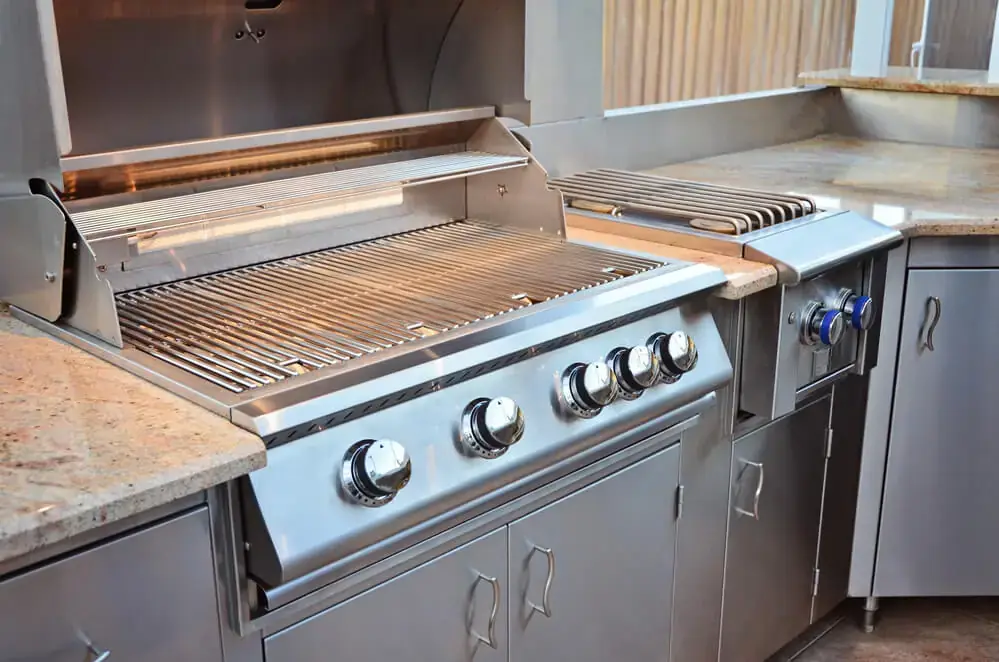
Examining how to reduce appliance rust in outdoor kitchens requires dismantling the pervasive misconception that stainless steel is entirely stainless and immune to environmental decay. Many consumers assume that any appliance labeled as stainless steel can withstand coastal salt air, acid rain, and harsh commercial grill cleaners indefinitely. In reality, standard 304-grade stainless steel contains lower concentrations of molybdenum, making it highly vulnerable to chloride ion attack when exposed to swimming pool chemicals, ocean salt sprays, or residual food acids left baking under direct solar radiation.
Another major misunderstanding involves the use of incorrect cleaning implements and harsh chemical agents. Scrubbing brushed stainless steel surfaces with carbon-steel wool pads embeds microscopic iron particles into the grain of the alloy, which rust rapidly and trigger localized pitting across the entire appliance chassis. Furthermore, oversimplifying cover selection by placing heavy, non-breathing vinyl tarps directly over damp metal appliances traps condensation inside a greenhouse microclimate, accelerating severe oxidation and surface blistering.
Oversights also plague galvanic isolation. When dissimilar metals—such as carbon steel mounting screws contacting an aluminum grill chassis or standard steel brackets touching a stainless steel frame—are subjected to moisture, galvanic currents accelerate metallic erosion at the junction points. Recognizing these systemic vulnerabilities is the baseline requirement for designing an effective, long-term corrosion mitigation strategy.
Deep Contextual Background: The Evolution of Marine-Grade Alloy Engineering
The contemporary science of protecting open-air culinary equipment descends from centuries of maritime and industrial metallurgy. Historically, outdoor cooking apparatuses were fabricated from heavy cast iron or mild carbon steel, requiring constant coatings of lard, oil, or high-temperature paint to prevent rapid flaking and structural rust. These primitive protective measures demanded intensive, ongoing manual labor and offered limited lifespans when exposed to persistent weather extremes.
During the mid-twentieth century, the widespread commercial adoption of austenitic stainless steels revolutionized appliance manufacturing. The discovery that adding chromium to steel creates a self-healing passive oxide film shifted the industry toward low-maintenance, aesthetically clean designs. However, as suburban outdoor living spaces expanded into coastal regions and areas with aggressive chemical environments, standard architectural stainless steel grades proved inadequate against localized pitting and chloride stress corrosion cracking.
This historical performance gap drove the development and integration of marine-grade alloys—specifically 316-grade stainless steel, which incorporates molybdenum to resist saline and acidic attack. Modern outdoor kitchen planning relies heavily on understanding this metallurgical evolution, recognizing that environmental severity must dictate alloy selection rather than aesthetic preference alone.
Conceptual Frameworks and Mental Models for Corrosion Prevention
Designing an environment that minimizes metallic oxidation requires structured mental models that impose discipline on alloy selection, barrier protection, and microclimate control.
The Passive Film Integrity Model
This framework views stainless steel not as a static block of metal, but as a dynamic surface protected by an invisible chromium oxide layer. It dictates that mechanical scratching, harsh chloride cleaners, or iron contamination disrupt this protective barrier, requiring immediate passivation treatments to restore the self-healing oxide shield.
The Environmental Aggressiveness Matrix
This mental model evaluates every outdoor installation site based on cumulative corrosive factors: distance from saltwater bodies, proximity to chlorinated swimming pools, local air pollution levels, and seasonal humidity swings. It determines whether standard 304 alloys are sufficient or if high-cost 316 marine-grade components are mandatory to prevent premature failure.
The Galvanic Isolation Hierarchy
To prevent electrochemical transfer between dissimilar metals, this model governs fastener and framing selection. It mandates the use of dielectric spacers, polymer washers, and matching alloy hardware to ensure that moisture cannot bridge electrical potentials between touching metal components.
Key Categories and Structural Variations: Trade-Offs and Comparisons
Selecting the correct material specifications and protective strategies dictates how effectively an outdoor appliance resists corrosion. The primary intervention categories present distinct operational compromises.
-
Marine-Grade 316 Stainless Steel Upgrades: Specifying appliances constructed entirely from molybdenum-alloyed stainless steel. It provides exceptional resistance to salt and chemical pitting, but incurs a substantial upfront capital premium.
-
Breathable, Waterproof Protective Covers: Utilizing multi-layer, marine-fabric covers equipped with internal moisture-ventilation flaps. It blocks direct rain and UV degradation while preventing condensation traps, but requires manual handling.
-
Ceramic-Infused Thermal Barrier Coatings: Applying professional-grade hydrophobic and ceramic coatings to exterior metal chassis. It repels moisture and food acids effectively, but degrades under extreme direct burner heat over multiple seasons.
-
Sacrificial Anode Cathodic Protection: Mounting zinc or magnesium blocks near vulnerable metal frames in high-salinity zones. It draws corrosive ions away from the appliance body, but requires periodic inspection and replacement.
-
Dielectric Isolation Fastener Kits: Replacing standard steel screws and bolts with nylon-insulated, matching-alloy fasteners. It eliminates galvanic corrosion at structural joints, but demands precise hardware matching during assembly.
-
Synthetic Polymer Cabinetry Integration: Housing metal appliance chassis inside corrosion-proof high-density polyethylene (HDPE) or PVC structures. It eliminates frame-to-appliance rust transfer, but limits traditional masonry aesthetics.
-
Automated Passivation Acid Treatments: Periodically scrubbing surfaces with specialized citric acid solutions to strip free iron and rebuild the chromium oxide layer. It restores maximum corrosion resistance, but requires meticulous labor.
-
Strategic Microclimate Positioning: Locating appliances away from prevailing coastal winds and direct pool splash zones. It reduces chemical exposure naturally, but restricts architectural layout flexibility.
Corrosion Mitigation Strategy Comparison
| Strategy Category | Upfront Capital Outlay | Maintenance Frequency | Corrosion Resistance Efficacy | Aesthetic Impact |
| Marine-Grade 316 Upgrades | High | Low | Maximum | Neutral |
| Breathable Fabric Covers | Low-Moderate | Monthly | Moderate-High | Minor |
| Ceramic Hydrophobic Coatings | Moderate | Bi-Annual | High | High Gloss |
| Sacrificial Zinc Anodes | Low | Annual | Moderate | Industrial |
Realistic Decision Logic
When evaluating these options against site constraints, the primary decision pivot is geographic proximity to corrosive environments versus budget limitations. If an outdoor kitchen is located within five miles of a saltwater coastline or directly adjacent to a chlorinated swimming pool, investing in marine-grade 316 stainless steel appliances and dielectric fasteners is mandatory to prevent rapid structural pitting. Conversely, in an inland environment with low humidity and zero pool chemical exposure, standard 304-grade appliances combined with breathable covers and regular passivation cleaning provide optimal economic and structural efficiency.
Detailed Real-World Scenarios and Field Constraints
Translating corrosion prevention theory into physical site execution requires analyzing specific structural roadblocks and environmental challenges.
A : The Coastal Salt-Spray Pitting Crisis
A homeowner installs a standard 304-grade stainless steel built-in grill on a patio situated two blocks from the oceanfront.
-
Constraint: Airborne chloride ions settle on the warm metal surface during daytime sea breezes, breaking down the passive oxide layer and causing severe orange pitting within six months.
-
Decision Point: The owner strips the rusted surface with a citric-acid passivation cleaner, applies a high-grade hydrophobic ceramic sealant, and invests in a custom marine-grade breathable cover.
-
Failure Mode: Scrubbing the pitting marks with a standard steel-wool scouring pad embeds iron shards into the steel, accelerating the corrosion rate exponentially.
-
Second-Order Effect: Protecting coastal appliances requires a strict monthly maintenance schedule of fresh-water rinsing and protective oil wiping to neutralize salt accumulation.
B : The Swimming Pool Chemical Vapor Reaction
An outdoor kitchen is constructed immediately adjacent to a heavily chlorinated in-ground swimming pool and automated chlorine generator system.
-
Constraint: Chlorine gas and mist drifting from the pool surface react with moisture on the nearby refrigerator doors, causing rapid localized discoloration and surface scaling.
-
Decision Point: The property owner installs a physical wind-break glass screen between the pool and the kitchen island, and transitions all exposed hardware to 316-grade stainless components.
-
Failure Mode: Wiping the surfaces down with standard household bleach cleaners exacerbates the chemical attack by introducing high concentrations of sodium hypochlorite.
-
Second-Order Effect: Rearranging outdoor living zones to account for chemical vapor drift requires careful consideration of prevailing wind patterns and patio flow.
C : The Trapped Moisture Vinyl Tarp Disaster
An owner covers their outdoor kitchen island with an inexpensive, heavy non-breathing plastic tarp secured tightly around the base during a wet autumn.
-
Constraint: Ground moisture evaporates, rises under the plastic sheet, and condenses directly against the cold metal appliance housing, creating an enclosed sauna that blisters the finish.
-
Decision Point: The owner discards the impermeable plastic tarp, cleans the mildewed metal surfaces, and replaces it with a commercial-grade vented canvas cover designed for air circulation.
-
Failure Mode: Leaving a non-breathing cover on an outdoor appliance through winter guarantees accelerated hidden corrosion and mold growth.
-
Second-Order Effect: High-end breathable covers represent a higher initial purchase cost but eliminate the structural damage caused by trapped condensation.
D : The Dissimilar Metal Galvanic Failure
A builder mounts an aluminum access door frame directly to a stainless steel grill island using standard carbon-steel sheet metal screws without isolating washers.
-
Constraint: Rainwater acting as an electrolyte creates a galvanic cell between the carbon steel screws and the aluminum frame, dissolving the screw threads within a single season.
-
Decision Point: The installation crew drills out the failed fasteners, treats the holes with anti-corrosion paste, and reinstalls the doors using nylon-isolated 316 stainless steel hardware.
-
Failure Mode: Using generic hardware store screws in mixed-metal exterior assemblies triggers rapid structural failure regardless of the quality of the main appliance.
-
Second-Order Effect: Sourcing specialized dielectric hardware requires advance planning and careful inventory management during the framing phase.
Planning, Cost Structures, and Resource Dynamics
Financial efficiency in preventing appliance corrosion relies on upfront alloy selection and preventative maintenance rather than expensive post-oxidation remediation.
-
Direct Material Costs: Marine-grade 316 appliance upgrades, specialized passivation cleaners, hydrophobic ceramic coatings, and breathable protective covers.
-
Indirect and Overhead Costs: Professional metallurgical assessments, replacement hardware kits, and specialized maintenance tool investments.
-
Opportunity Costs: The loss of appliance lifespan, diminished property resale value, and the high cost of emergency appliance replacement due to rusted-out burner boxes.
-
Geographic Variability: Proximity to marine salt air, industrial air pollution, and high humidity zones dictates the frequency and intensity of required protective maintenance.
Financial Allocation and Range Dynamics
| Corrosion Defense Tier | Typical Financial Outlay | Material Grade Focus | Maintenance Requirement | Expected Asset Lifespan |
| Standard Economy Protection | $150 – $500 | 304 Grade + Standard Cover | Monthly wiping / Basic wash | Moderate (3 – 6 Years) |
| Optimized Regional Defense | $600 – $2,000 | 304/316 Hybrid + Ceramic Seal | Bi-annual passivation | High (7 – 12 Years) |
| Comprehensive Marine Armor | $2,500 – $7,000+ | Full 316 Grade + Dielectric Kits | Quarterly specialist care | Maximum (15+ Years) |
Tools, Construction Strategies, and Support Systems
Execution efficiency in corrosion control relies on deploying specialized cleaning compounds, passivation tools, and protective hardware systems.
-
Citric-Acid Passivation Solutions: Safely dissolves free iron contaminants from stainless steel surfaces and accelerates the reformation of the protective chromium oxide layer without harsh toxicity.
-
Non-Woven Synthetic Scouring Pads (Scotch-Brite): Provides gentle abrasive cleaning along the natural grain of brushed stainless steel without embedding harmful carbon steel particles.
-
Microfiber Detailing Cloths: Ensures streak-free application of protective culinary oils and hydrophobic ceramic sealants on polished metal chassis.
-
Digital Relative Humidity and Salinity Meters: Monitors microclimate conditions around the outdoor kitchen structure to assess local corrosive pressure.
-
Torque-Limiting Drivers: Prevents over-tightening of fasteners during assembly, avoiding stress fractures in stainless steel mounting flanges that trap moisture.
-
Aerosol-Free Hydrophobic Spray Applicators: Evenly distributes ceramic nano-coatings across complex appliance contours without propellant chemical contamination.
-
Nylon and PTFE Dielectric Insulators: Physically separates dissimilar metals at structural joint interfaces to completely halt galvanic current transfer.
Risk Landscape, Failure Modes, and Compounding Hazards
Ignoring metallurgical realities and corrosion control principles introduces compounding hazards that compromise appliance safety, structural integrity, and operational reliability.
Burner Firebox Perforation and Gas Leaks
Unchecked oxidation on the bottom and sides of grill fireboxes eventually eats through the metal walls. Perforated fireboxes allow high-heat flames and burning grease to escape into the enclosed cabinetry, creating severe fire and explosion risks.
Structural Collapse of Mounting Flanges
Rusted mounting screws and corroded structural support brackets lose their tensile strength. Heavy built-in grills or refrigeration units can shift, drop, or pull away from stone countertops, shearing gas supply lines and electrical conduits.
Electrical Short Circuits and Shock Hazards
Moisture intrusion driven by corroded seals and pitted housing panels reaches internal low-voltage transformers, igniter switches, and lighting harnesses, causing persistent short circuits and electrical shock hazards.
Toxic Contamination from Decaying Metal Oxides
Heavy surface scaling and rust accumulation on food-contact surfaces (such as lower warming racks and interior cavity walls) transfer metallic oxides onto food items, compromising culinary hygiene and safety.
Governance, Maintenance, and Long-Term Adaptation
Preserving corrosion-resistant outdoor appliances requires systematic seasonal maintenance, protective re-coating cycles, and proactive environmental management.
Seasonal Maintenance Protocols
-
Spring De-Winterization and Passivation: Stripping winter grime, inspecting for initial rust pitting, and applying a fresh citric-acid passivation treatment before heavy summer use.
-
Mid-Summer Hydrophobic Refresh: Washing exterior metal surfaces with pH-neutral soap and reapplying ceramic protective sprays during peak humidity months.
-
Autumn Deep Cleaning and Cover Inspection: Thoroughly drying all appliance cavities, oiling stainless surfaces with food-grade protectants, and securing breathable covers for winter storage.
Review Cycles and Adjustment Triggers
Establishing quarterly inspection windows allows property owners to check for early orange discoloration, pitting around weld seams, and hardware corrosion. If rust spots begin appearing, immediate mechanical removal and passivation prevent minor surface staining from deepening into structural pitting.
Layered Corrosion Maintenance Checklist
-
Inspect all stainless steel weld zones for microscopic salt or moisture accumulation.
-
Verify that breathable covers are secured tightly yet permit adequate bottom airflow.
-
Check that dielectric washers remain intact at all mixed-metal connection points.
-
Test appliance igniters and electrical panels for moisture intrusion or oxidation wear.
Measurement, Tracking, and Evaluation Metrics
Evaluating the success of a corrosion prevention strategy requires tracking both quantitative environmental resilience markers and qualitative metallurgical condition indicators over extended operational cycles.
-
Pitting Density Index: Quantifying the number of micro-pits per square foot on exposed appliance chassis during quarterly inspections.
-
Passivation Interval Duration: Tracking the months elapsed between required citric-acid passivation treatments to measure surface stability.
-
Surface Hydrophobicity Angle: Measuring water droplet contact angles on ceramic-coated metal panels to evaluate coating wear.
-
Hardware Integrity Ratio: Recording the percentage of uncorroded versus replaced fasteners during annual maintenance audits.
Documentation and Tracking Examples
-
Metallurgical Audit Log: Recording quarterly observations of surface pitting, discoloration, and weld seam health.
-
Maintenance Ledger: Documenting cleaning dates, passivation treatments applied, and ceramic coating renewals.
-
Hardware Replacement Record: Tracking the installation dates of dielectric washers, marine-grade fasteners, and protective covers.
Common Misconceptions and Oversimplifications
-
Myth: Stainless steel appliances never rust, regardless of where they are installed or how they are maintained.
-
Correction: All stainless steel can rust under aggressive environmental conditions if its protective chromium oxide layer is compromised by salt, chemicals, or iron contamination.
-
-
Myth: Scrubbing rust spots with a standard steel wool pad is an effective way to clean outdoor grills.
-
Correction: Steel wool embeds microscopic iron particles into the stainless steel grain, triggering accelerated secondary rusting across the entire surface.
-
-
Myth: Wrapping outdoor appliances tightly in cheap plastic tarps provides total protection against winter moisture.
-
Correction: Impermeable plastic traps condensation against the cold metal, creating a high-humidity greenhouse that accelerates blistering and corrosion.
-
-
Myth: Household bleach is a safe, effective cleaner for removing stubborn stains and grease from outdoor kitchen stainless steel.
-
Correction: Chlorine bleach contains high concentrations of chloride ions that actively attack the passive film of stainless steel, causing rapid pitting.
-
-
Myth: All stainless steel grades perform equally well in coastal and non-coastal outdoor kitchen environments.
-
Correction: Standard 304 grade lacks molybdenum and fails rapidly in marine salt-air environments, where marine-grade 316 alloy is required.
-
-
Myth: Applying cooking oil to a stainless steel grill exterior permanently prevents rust formation.
-
Correction: Unrefined cooking oils oxidize and turn sticky under solar UV exposure, trapping dust and moisture and feeding bacterial growth.
-
Ethical, Practical, and Contextual Considerations
Maintaining metallic infrastructure in residential outdoor spaces carries important environmental and safety responsibilities. Using harsh industrial acid washes or aggressive chemical rust removers requires careful containment to prevent toxic runoff from contaminating surrounding garden soil, lawn turf, or storm drainage systems. Property owners must prioritize eco-friendly, biodegradable citric-acid passivation agents and safe disposal protocols for spent cleaning fluids. Furthermore, ensuring that gas-fired appliances remain structurally sound through rigorous corrosion management prevents catastrophic fuel leaks, protecting human safety, property integrity, and local community welfare.
Conclusion
Mastering how to reduce appliance rust in outdoor kitchens requires an analytical commitment to metallurgical grade selection, passive film maintenance, and rigorous environmental barrier management. By rejecting the myth of maintenance-free stainless steel, embracing marine-grade 316 alloys where appropriate, avoiding harmful chloride cleaners, and utilizing breathable protective covers, property owners can achieve enduring structural resilience. True corrosion resistance is born of proactive chemical understanding, meticulous upkeep, and respect for environmental electrochemistry.